2026-11-14 · Tony Moretti
Preventing Frozen Pipe Bursts in Philadelphia Row Homes
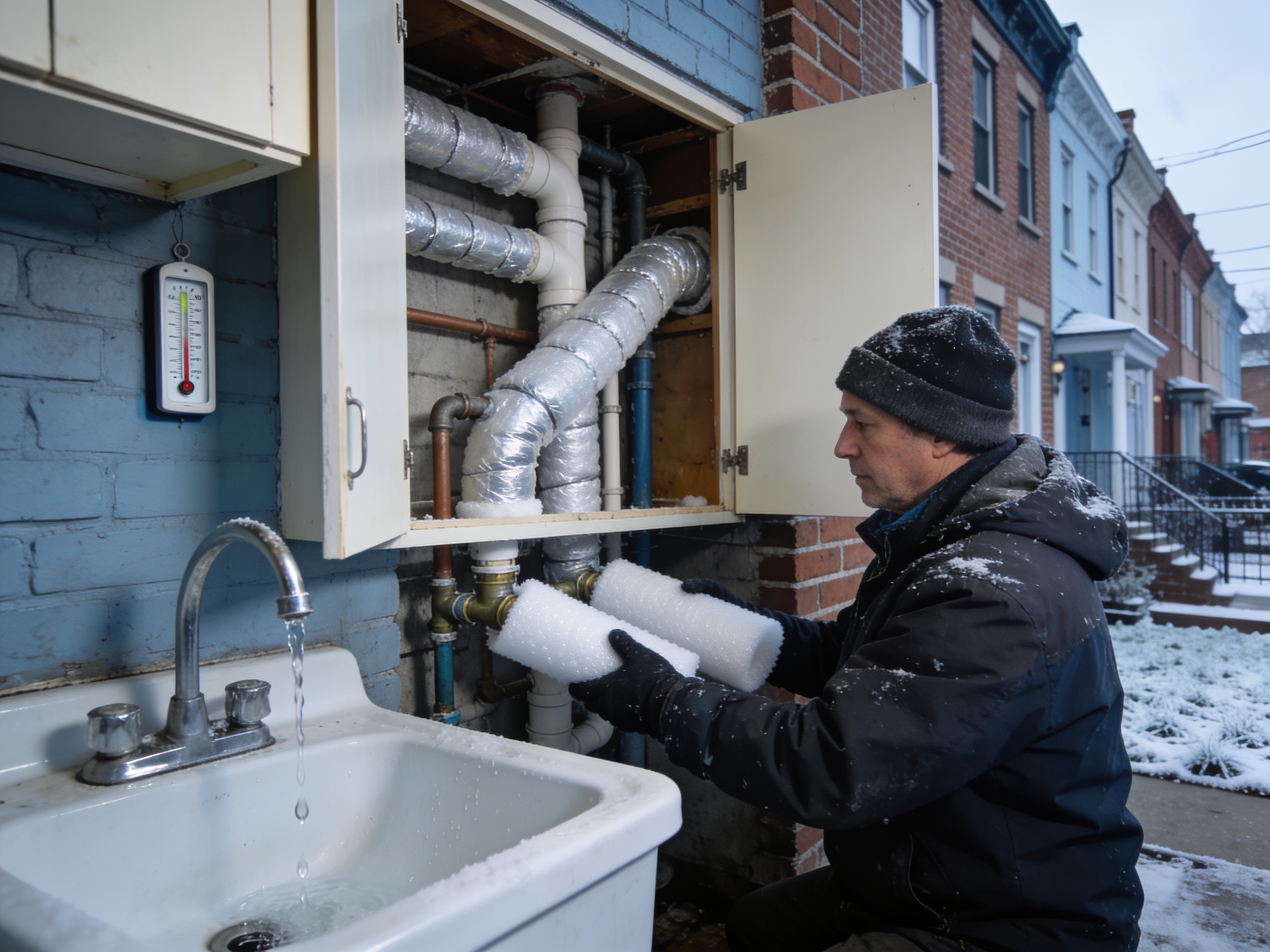
In Philadelphia row homes, preventing frozen pipe bursts starts with insulating exposed pipes in basements and exterior walls while keeping indoor temperatures above 55°F on nights when winter lows dip into the teens. This approach addresses the realities of the city's humid subtropical climate with its sudden cold snaps and the narrow, multi-story layouts common in neighborhoods such as South Philadelphia, Fishtown, and Kensington.
Why Philadelphia Row Homes Face Elevated Freeze Risks
Philadelphia row homes built before 1950 often route supply lines along uninsulated exterior walls or through shallow basements that sit close to frozen ground. In South Philadelphia and North Philadelphia, these brick structures share side walls yet leave front and rear pipes exposed to wind that funnels between tight rows. Cold air drops below 20°F for several nights each January and February, turning standing water in horizontal runs into ice that expands and splits copper or galvanized lines. The same pattern appears in West Philadelphia and Germantown where older cast-iron stacks meet modern PEX transitions. Once a line bursts, water migrates downward through shared party walls, affecting multiple units before anyone notices. Homeowners who leave properties vacant for even two days during a cold spell see the highest incidence because furnaces cycle less often and heat never reaches the outer walls.
Targeted Insulation Steps for Row Home Plumbing
Begin by locating every pipe run in the basement and crawl space, paying special attention to lines that travel within six inches of exterior brick. Wrap these sections with closed-cell foam sleeves rated for at least 1/2-inch wall thickness, then seal all seams with foil tape so moisture cannot reach the insulation. In Manayunk and Roxborough homes that sit on sloped lots, add heat tape controlled by a thermostat set to 38°F along the coldest 10–15 feet of pipe. Keep cabinet doors under sinks open during forecasted lows so warm air from the living space circulates around supply lines. For the small percentage of row homes with pipes in exterior walls, install removable foam board panels on the interior side during November and remove them in March. These steps reduce the chance of a freeze by addressing the actual air paths and thermal bridging present in Philadelphia's dense housing stock.
Daily and Weekly Winter Monitoring Practices
Check the furnace filter every two weeks during December through February because restricted airflow lowers overall heat output and leaves remote corners of the house colder. Place an inexpensive digital thermometer in the basement near the water heater; if readings fall below 50°F while outdoor temperatures hover near 15°F, increase the thermostat by two degrees and verify that heat registers remain unobstructed. On days when forecasts call for sustained sub-freezing weather, run a trickle of cold water from the highest and lowest faucets in the house to keep water moving. Residents in University City and Northern Liberties who work long shifts should ask a neighbor to perform this check or install a smart thermostat that alerts by phone if indoor temperature drops unexpectedly. These habits catch problems while pipes are still intact rather than after a rupture floods finished basement space.
When Frozen Pipes Have Already Burst
If a line does freeze and split, shut off the main valve immediately and open all faucets to relieve pressure. Document the damage with dated photos before any cleanup begins. Water that has traveled through multiple floors often requires extraction and drying equipment sized for row-home square footage rather than single-family layouts. Homeowners in Center City and Mount Airy frequently discover that one burst affects both their unit and the neighboring property because of shared foundations. Professional water damage restoration teams familiar with these buildings can locate hidden moisture behind plaster and lath that standard fans miss. For ongoing issues tied to aging supply lines, review the article on handling water damage from aging sewer lines in South Philadelphia and the water damage repair service page for guidance on permanent fixes suited to Philadelphia's housing stock.