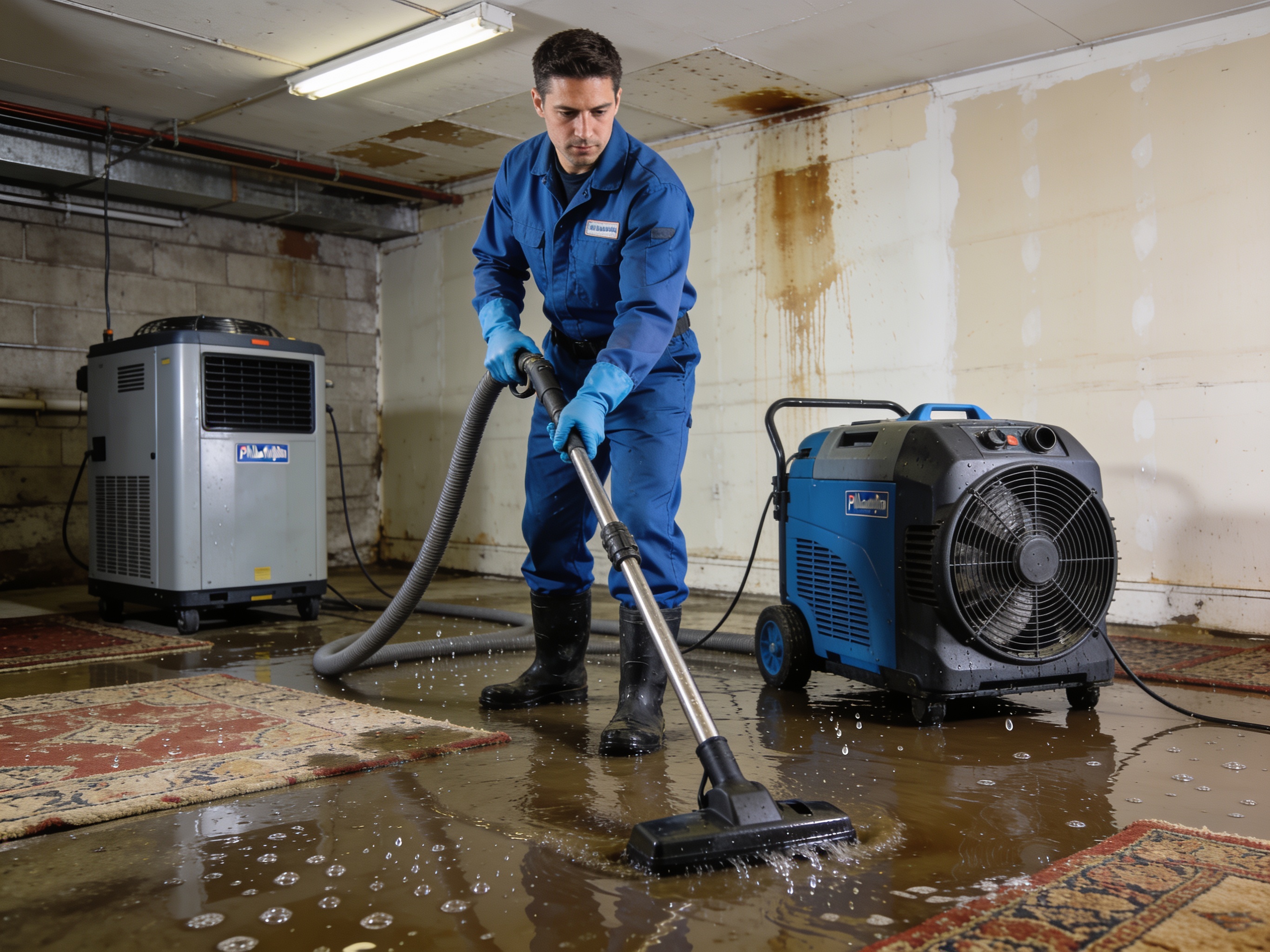
Philadelphia's older row homes in South Philadelphia and Kensington often feature plaster-and-lath walls and shared foundations that let water migrate between units during heavy summer storms or winter pipe bursts. Restoration crews must open walls carefully to avoid spreading hidden moisture into neighboring properties while meeting city code requirements for structural repairs in pre-1950 buildings. Cold winters followed by rapid thaws create repeated freeze-thaw cycles that stress copper and galvanized lines, turning small leaks into widespread saturation under finished basements.
Humid subtropical summers raise indoor moisture levels quickly once water enters, especially in University City and Northern Liberties properties near the Schuylkill and Delaware rivers. Technicians use targeted moisture mapping and commercial dehumidifiers sized for tight row-home footprints rather than open suburban layouts. Sewage backups from aging combined sewer systems in North Philadelphia and Germantown require separate containment zones and disposal protocols that differ from clean-water events.
Restoration after flooding near the Benjamin Franklin Parkway or Citizens Bank Park frequently involves removing water from concrete slabs and checking for migration into adjacent commercial spaces. Crews document every step for insurance adjusters because many Center City and Manayunk buildings sit on fill or sloped terrain that directs runoff toward lower levels. Drying times extend when exterior brick retains moisture through the humid months, requiring extended monitoring before finishes can be replaced.
Technician insight
In Philadelphia, the thing that catches most people out with Water Damage Restoration is how quickly moisture travels through shared brick foundations and plaster lath in South Philadelphia and Kensington row homes, especially after winter freezes that crack pipes running along party walls.
Fishtown Row Home After Pipe Freeze
A burst pipe on the second floor of a 1920s Fishtown row home sent water through plaster walls into the first-floor kitchen and shared basement. Extraction removed standing water the same day, then drying equipment ran for six days while crews monitored the neighboring unit. Final readings cleared the structure for repairs without mold growth or damage to adjacent properties.
Water Damage Restoration Services We Offer
✓Emergency Water Extraction
Rapid removal of standing water from basements and first floors using truck-mounted pumps sized for Philadelphia row-home volumes.
✓Structural Drying and Dehumidification
Placement of air movers and dehumidifiers to pull moisture from plaster, joists, and subfloors common in pre-war Kensington and Fishtown homes.
✓Basement Flood Cleanup
Clearing silt and contaminants from below-grade spaces after river or sewer backups in South Philadelphia and Roxborough neighborhoods.
✓Pipe Burst Restoration
Drying and repair coordination after winter freezes in older copper lines found throughout Germantown and Mount Airy properties.
✓Sewage Backup Remediation
Containment, removal, and sanitization of contaminated water from aging combined sewers affecting North Philadelphia and West Philadelphia blocks.
Water Damage Restoration Cost in Philadelphia, PA
| Service | Typical Range | What Affects It |
|---|---|---|
| Initial Assessment And Extraction | $350–$750 | Varies by water depth and access in row-home basements |
| Drying Equipment Rental Per Day | $150–$300 | Number of days required rises with humidity and wall type |
| Sewage Containment And Disposal | $400–$900 | Higher in older North Philadelphia sewer backups |
| Final Moisture Verification | $100–$200 | Required before any reconstruction in multi-unit buildings |
Ranges are typical for Philadelphia, PA and confirmed with an exact written quote before any work starts.
How it works
- 1
On-Site Assessment
Technician inspects affected rooms, maps moisture with meters, and notes shared-wall risks in Philadelphia row construction.
- 2
Water Removal
Pumps and vacuums extract standing water while protecting adjacent units common in Center City and Northern Liberties blocks.
- 3
Drying And Monitoring
Equipment runs with daily readings until moisture levels meet restoration standards for local plaster and hardwood.
- 4
Final Clearance
Walls and floors are checked again before any reconstruction begins, with documentation provided for insurance.
Pricing
Upfront quotes after inspection; final cost depends on affected square footage, drying duration, and whether sewage or clean water is involved.