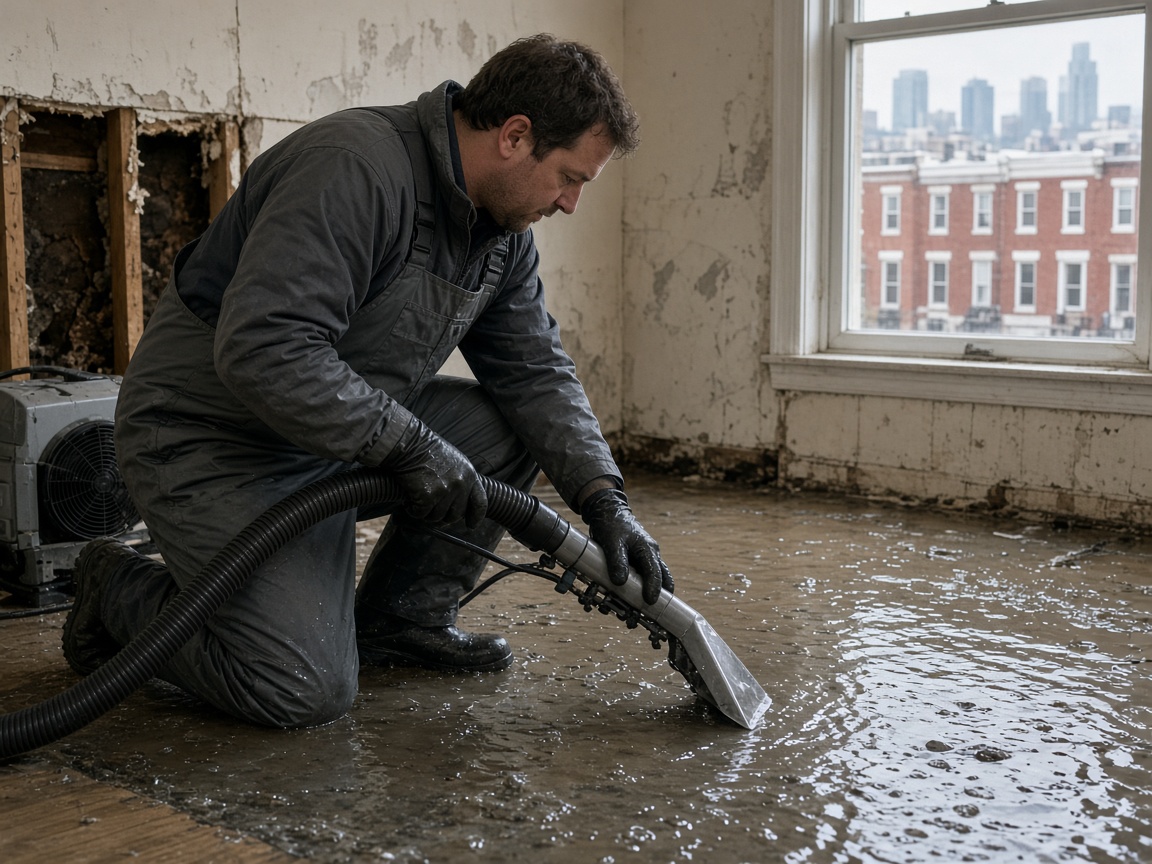
Philadelphia's humid subtropical climate brings heavy summer downpours and winter freezes that stress older brick row homes across South Philadelphia, Kensington, and Northern Liberties. Basements in these pre-1950 structures often lack modern waterproofing, allowing water from the Delaware and Schuylkill to push through foundation cracks and shared walls. Restoration crews must account for plaster and lath walls that retain moisture far longer than drywall, plus the risk of hidden mold growth behind wainscoting common in Fishtown and Manayunk properties.
When flooding reaches University City or Roxborough, the job changes because of hilly terrain and older sewer lines that back up during storms. Technicians extract standing water first, then deploy industrial dehumidifiers sized for the tight floor plans typical of Philadelphia row homes. Air movers are positioned to push moisture out through basement windows without disturbing historic details in Center City or Germantown buildings. Failure to address trapped moisture under hardwood floors leads to cupping that requires full replacement weeks later.
Nearby cities like Camden and Trenton share the same riverine flood risks, but Philadelphia jobs often involve coordinating with local codes on lead paint and asbestos in homes built before 1978. Restoration includes removing saturated insulation from balloon-framed walls in West Philadelphia and Mount Airy while protecting remaining finishes. Crews document every step for insurance because secondary damage from delayed drying appears quickly in the region's high summer humidity.
Technician insight
In Philadelphia, the thing that catches most people out with Flood Damage Restoration is how quickly moisture travels through the shared brick walls of South Philadelphia and Kensington row homes. A flood in one basement often affects the neighbor's foundation because of the lack of proper vapor barriers in homes built before modern codes. We always check adjacent properties early because winter freezes followed by sudden thaws push water farther than summer storms alone.
Fishtown Basement After Summer Storm
Heavy rain overwhelmed the combined sewer on a Fishtown block, sending water through a cracked foundation into a 1920s row home. We found moisture had wicked up plaster walls and under the pine flooring. Extraction and targeted drying prevented mold from reaching the first floor, and the homeowner avoided full wall replacement.
Flood Damage Restoration Services We Offer
✓Basement Flood Extraction
Rapid removal of standing water from Philadelphia row home basements using truck-mounted pumps suited for narrow alleys in South Philadelphia and Kensington.
✓Storm and River Flood Drying
Industrial drying and dehumidification after Delaware or Schuylkill overflow, calibrated for the dense brick construction found in Fishtown and Northern Liberties.
✓Sewage Backup Cleanup
Safe extraction and disinfection of contaminated water from combined sewer overflows common during heavy rains in Center City and University City.
✓Mold Remediation After Flooding
Containment and removal of mold that develops behind plaster walls in older Germantown and Mount Airy homes once floodwater recedes.
✓Structural Drying and Monitoring
Daily moisture readings and targeted drying of joists and subfloors in Manayunk and Roxborough properties to prevent long-term warping.
Flood Damage Restoration Cost in Philadelphia, PA
| Service | Typical Range | What Affects It |
|---|---|---|
| Emergency Water Extraction | $600–$1,800 | Varies by depth of water and access in row-home basements |
| Full Structural Drying | $800–$2,400 | Depends on number of rooms and duration of equipment runtime |
| Mold Remediation Add-On | $1,200–$3,500 | Increases when hidden growth is found behind plaster in pre-war homes |
| Content Cleaning | $400–$1,200 | Based on quantity of salvageable items and contamination level |
Ranges are typical for Philadelphia, PA and confirmed with an exact written quote before any work starts.
How it works
- 1
On-Site Assessment
Technician inspects affected areas in the specific Philadelphia neighborhood, checks moisture levels in walls and floors, and notes any shared-wall complications.
- 2
Water Extraction
Standing water is removed with equipment sized for tight Philadelphia basements and alleys, followed by removal of saturated materials.
- 3
Drying And Dehumidification
Air movers and dehumidifiers run continuously with daily monitoring until moisture readings return to normal for the building's age and construction.
- 4
Restoration And Repairs
Replacement of damaged drywall, flooring, and insulation, with attention to historic finishes where required in older Philadelphia homes.
Pricing
Upfront quotes after inspection; final cost depends on water volume, affected square footage, and materials requiring removal.