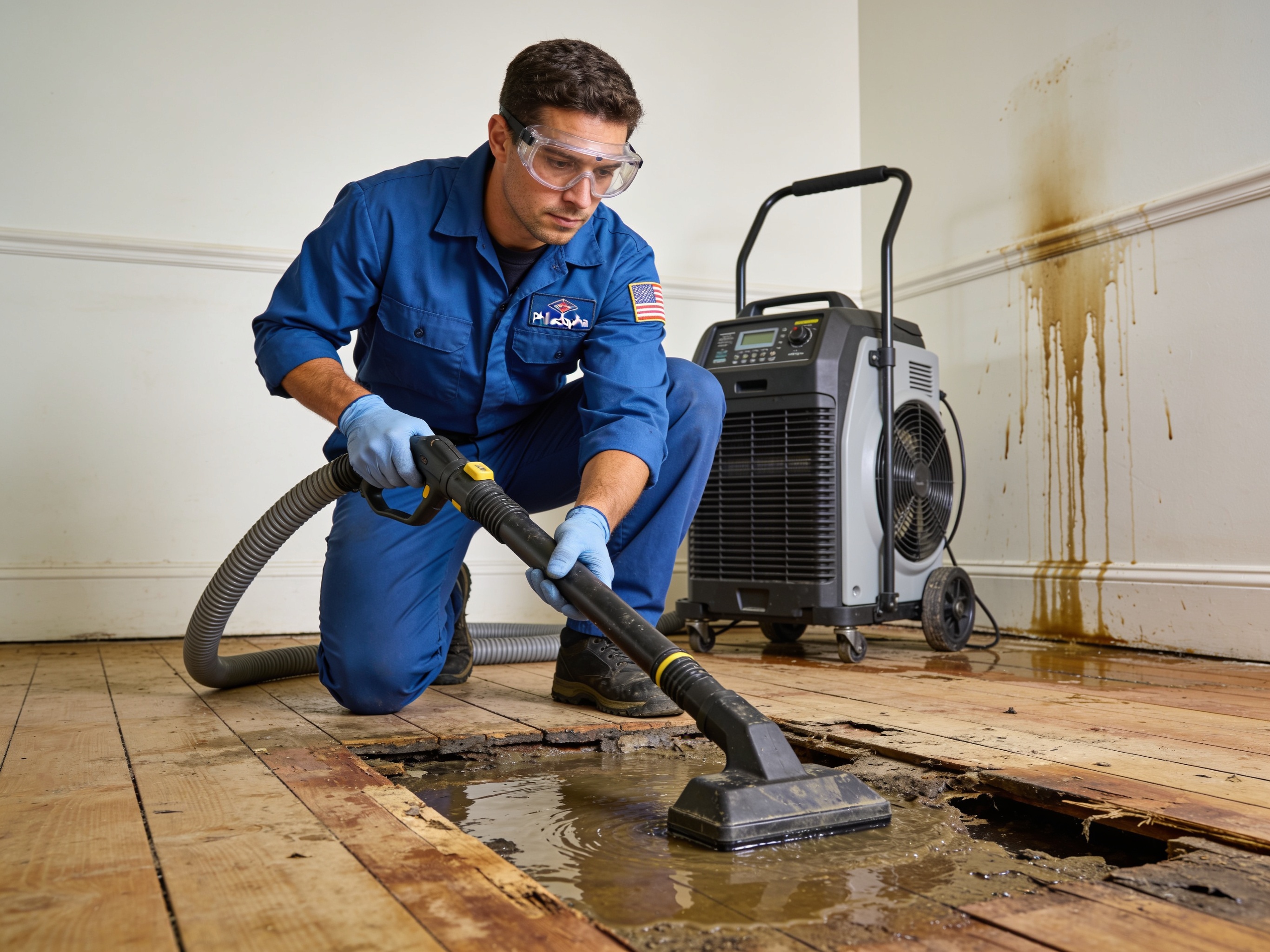
Philadelphia's older row homes in neighborhoods like Fishtown, Kensington, and South Philadelphia often feature plaster walls and narrow crawl spaces that trap moisture after leaks. Cold winters cause pipes to freeze and burst in unheated basements, while the humid subtropical summers accelerate mold growth once water sits. Technicians must navigate tight access points and shared walls that let water migrate between properties, requiring careful moisture mapping to avoid missing hidden saturation in lath and plaster.
Storm systems moving up from the Delaware River can overwhelm older combined sewers in North Philadelphia and University City, pushing water into finished basements. Properties near the Schuylkill or in Manayunk see repeated flooding along low-lying streets. Repair work here focuses on removing water without disturbing historic elements and drying materials that hold moisture longer than modern drywall, such as horsehair plaster common in pre-1950 homes.
Technicians working from the 19154 base respond to calls from Germantown and Roxborough where tree roots frequently crack clay sewer lines. Upfront inspection during Mon–Fri 8am–6pm or Sat 9am–2pm hours determines whether subfloor removal or wall cavity drying is needed before repairs begin.
Technician insight
In Philadelphia, the thing that catches most people out with Water Damage Repair is how water travels through shared brick walls in row homes in Fishtown and Kensington, so drying only the visible side leaves moisture that reappears after the next cold snap.
South Philadelphia Basement Leak
A homeowner in a 1920s row home noticed water along the foundation after a January freeze. Inspection showed a burst supply line that had soaked plaster on two levels and migrated into the neighboring unit. Technicians extracted water, placed drying equipment in the narrow cellar, removed saturated baseboards, and dried the cavities before patching to prevent mold in the humid summer months ahead.
Water Damage Repair Services We Offer
✓Burst Pipe Repair
Locate and replace frozen or corroded supply lines in Philadelphia row homes where winter temperatures drop below freezing in unheated spaces.
✓Basement Water Extraction
Remove standing water from below-grade spaces common in South Philadelphia and Kensington after heavy rain or sewer backup.
✓Plaster Wall Drying
Extract moisture from horsehair plaster and lath in older Center City and Fishtown homes without unnecessary demolition.
✓Sewage Cleanup
Handle contaminated water intrusion from combined sewers that affect properties in University City and Northern Liberties.
✓Roof Leak Repair
Stop and restore damage from flashing failures on flat roofs typical of row homes in West Philadelphia and Germantown.
Water Damage Repair Cost in Philadelphia, PA
| Service | Typical Range | What Affects It |
|---|---|---|
| Initial Assessment | Free | During listed business hours at 3600 Drumore Dr location |
| Minor Pipe Leak Repair | $400–$900 | Depends on location within walls and need for plaster repair |
| Basement Extraction | $800–$2,200 | Varies by water volume and whether sewage is involved |
| Full Room Drying | $600–$1,500 | Affected by plaster vs drywall and shared-wall migration |
Ranges are typical for Philadelphia, PA and confirmed with an exact written quote before any work starts.
How it works
- 1
On-Site Assessment
Inspect affected areas in the specific Philadelphia neighborhood to identify water source, extent of saturation, and hidden paths through walls and floors.
- 2
Water Removal
Extract standing water and pull moisture from materials using equipment suited to tight row-home access.
- 3
Drying and Monitoring
Apply targeted drying to plaster, subfloors, and cavities while tracking moisture levels over several days.
- 4
Repair and Restoration
Replace damaged sections and return the space to pre-loss condition using matching materials where possible.
Pricing
Upfront quotes provided after inspection; costs vary with access in older Philadelphia row homes and extent of hidden moisture.