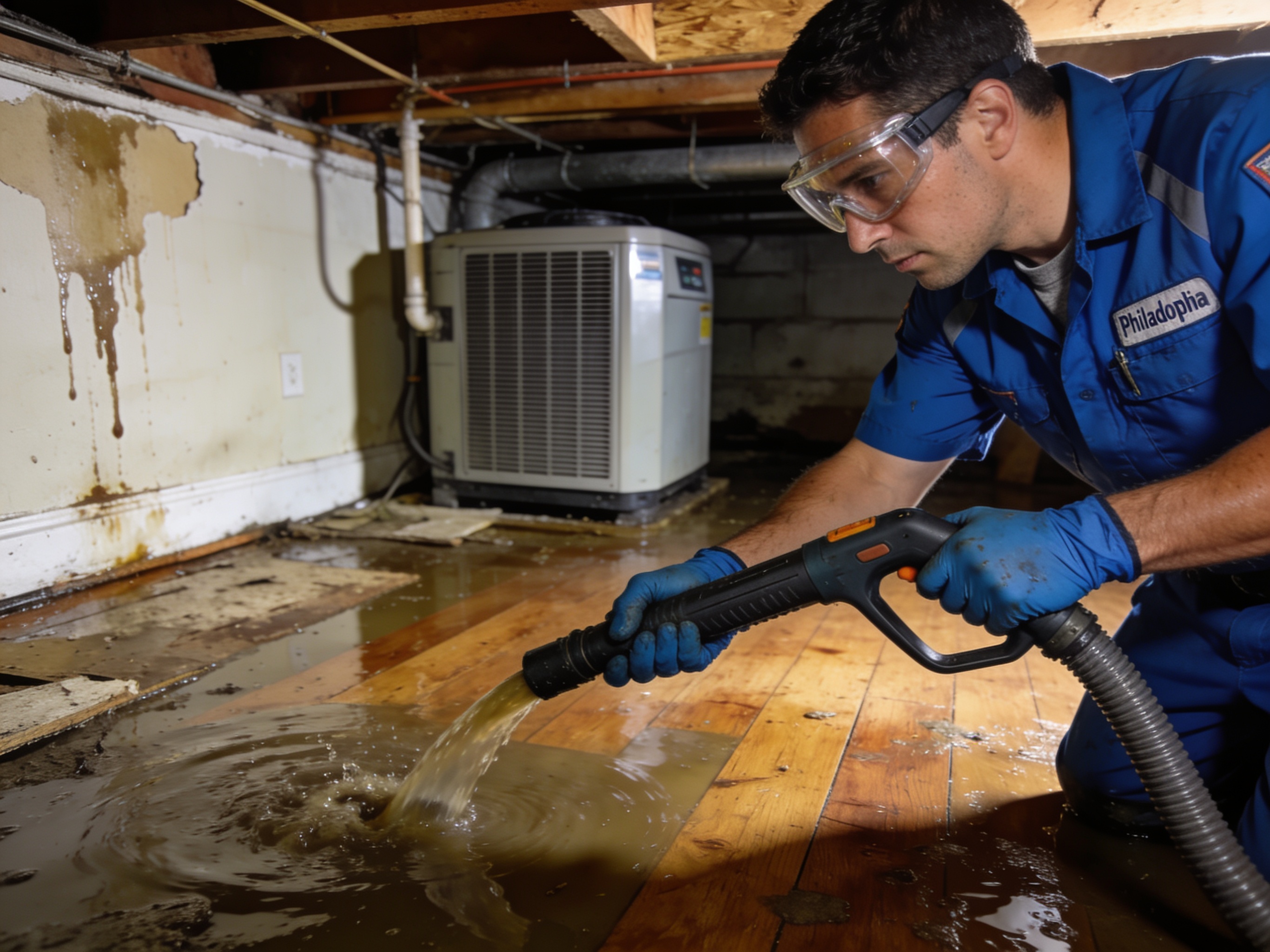
Philadelphia's humid subtropical climate brings cold winters that freeze pipes in older brick row homes throughout South Philadelphia and Kensington, while hot summers drive rapid mold growth after any moisture event. Water from burst lines or heavy rain often travels through shared walls and crawl spaces common in North Philadelphia and Germantown stock built before modern waterproofing codes. Extraction must account for these tight layouts and aged plaster or lath construction that holds hidden moisture longer than newer builds.
Storm runoff from the Delaware and Schuylkill rivers can back up into low-lying blocks near the Philadelphia Museum of Art and Benjamin Franklin Parkway, saturating foundations in University City and Manayunk. Technicians check for hidden saturation behind cabinets and under hardwood floors that were common in West Philadelphia Victorians. Delaying drying beyond 48 hours risks structural rot in joists that sit directly on soil in many pre-1950 homes.
Nearby cities like Camden and Trenton share similar river-adjacent flooding patterns, so crews monitor weather alerts from the National Weather Service for rapid mobilization. In Roxborough and Mount Airy, steep terrain channels water into basements during nor'easters, requiring pumps rated for higher volumes than flat Center City lots. Proper containment prevents cross-contamination between units in multi-family buildings common across Northern Liberties.
Technician insight
In Philadelphia, the thing that catches most people out with Emergency Water Damage Restoration is how quickly water travels through the brick party walls in South Philadelphia and Kensington row homes. A small leak in one unit can saturate three neighboring basements before anyone notices, especially after a winter freeze when pipes are already stressed.
Fishtown row home after pipe burst
A kitchen supply line froze and burst overnight in a 1920s Fishtown row home. Water migrated under the hardwood into the dining room and down into the shared basement wall with the next unit. Crews extracted standing water, placed drying equipment behind the plaster, and monitored readings for five days until levels stabilized without removing original floors.
Emergency Water Damage Restoration Services We Offer
✓Burst Pipe Water Extraction
Rapid removal of standing water from frozen or corroded pipes common in pre-war Philadelphia row homes, followed by targeted drying to protect original plaster and hardwood.
✓Storm Flood Restoration
Cleanup and drying after heavy rain or river backup affecting basements in South Philadelphia and Manayunk, including debris removal and moisture mapping of shared foundation walls.
✓Sewage Backup Cleanup
Safe extraction and disinfection of contaminated water from municipal line failures that hit older Kensington and Germantown properties, with full containment to protect adjacent units.
✓Ceiling and Wall Drying
Specialized equipment to pull moisture from lath-and-plaster assemblies typical in Center City and University City homes before mold sets in during humid summer months.
✓Basement Water Removal
Pump-out and dehumidification for low-lying properties in Fishtown and Northern Liberties where high water tables and poor grading allow repeated infiltration after winter thaws.
Emergency Water Damage Restoration Cost in Philadelphia, PA
| Service | Typical Range | What Affects It |
|---|---|---|
| Minor extraction and drying | $800–$1,800 | Single room in row home; higher in multi-story buildings with plaster walls |
| Basement flood cleanup | $1,500–$3,500 | Includes pump-out; increases with sewage contamination or shared-wall travel |
| Full-home drying | $2,500–$5,000 | Depends on square footage and how quickly water is discovered in humid conditions |
Ranges are typical for Philadelphia, PA and confirmed with an exact written quote before any work starts.
How it works
- 1
Arrival And Assessment
Technician inspects the source, maps affected rooms with moisture meters, and documents conditions in the specific Philadelphia neighborhood.
- 2
Water Extraction
Industrial pumps and vacuums remove standing water while protecting original floors and walls found in older Philadelphia housing stock.
- 3
Drying And Monitoring
Air movers and dehumidifiers run with daily checks until readings return to normal, accounting for humid summers that slow evaporation.
- 4
Final Inspection
Full walkthrough confirms hidden pockets are dry before any reconstruction begins, especially in multi-unit buildings.
Pricing
Upfront quotes after inspection; costs vary by water volume, affected square footage, and time required for older construction.