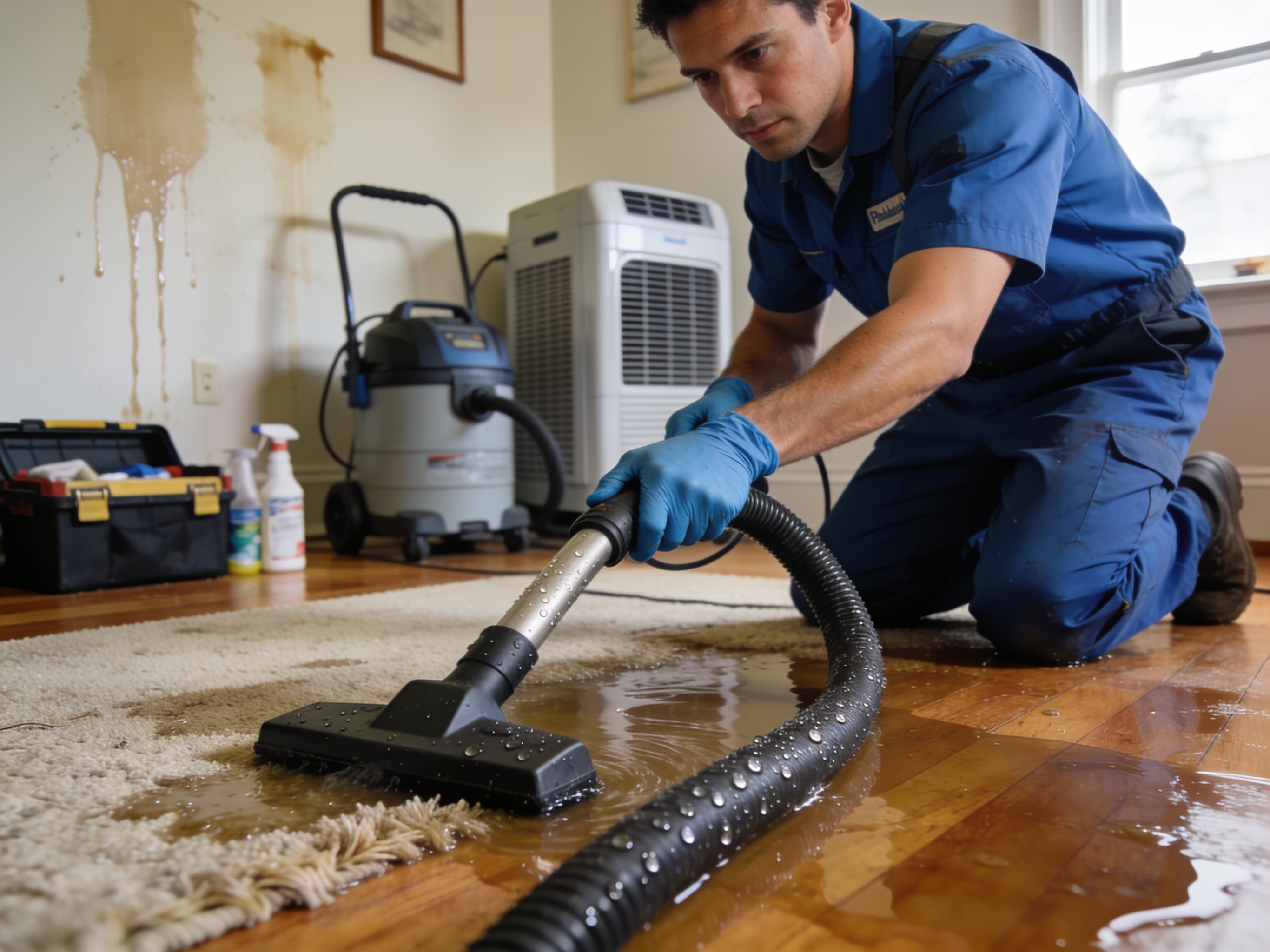
Philadelphia's dense stock of pre-1940 row homes with shared brick walls and below-grade basements creates unique restoration challenges after leaks or storms. Water travels quickly between properties in neighborhoods like Kensington and Northern Liberties, often requiring coordination with adjacent owners before full drying can begin. Winters bring freezing temperatures that burst pipes in unheated spaces, while summer humidity slows evaporation and raises mold risk in older plaster and lath construction.
Storm runoff from the Schuylkill and Delaware rivers plus aging combined sewer systems frequently backs up into South Philadelphia and University City basements during heavy rains. Extraction must account for clay-heavy soils that hold moisture against foundations, and crews routinely check for hidden saturation behind wainscoting and under refinished hardwood floors common in Manayunk and Roxborough. Delaying removal allows water to wick into party walls, turning a single-unit job into a multi-property project.
Restoration work in Germantown and Mount Airy often involves slate roofs and fieldstone foundations that channel water differently than modern builds. Technicians use moisture meters on thick masonry walls rather than relying on surface readings, and they stage drying equipment to avoid overloading older electrical panels found in many North Philadelphia homes. Proper containment also prevents dust and spores from migrating through the tight alleyways between properties.
Technician insight
In Philadelphia the thing that catches most people out with water damage restoration is how quickly water moves through shared brick party walls in row homes; a leak in one Kensington basement often saturates the neighbor's plaster before anyone notices.
Fishtown row home pipe burst
Frozen supply line ruptured overnight in a 1920s Fishtown row home. Water traveled under the finished basement floor into the adjacent property. Crew extracted water from both units, placed drying equipment against the shared wall, and monitored readings for five days until levels normalized.
Water Damage Restoration near Me Services We Offer
✓Basement Water Extraction
Removes standing water from Philadelphia row home basements where clay soils and shared foundations trap moisture against neighboring properties.
✓Pipe Burst Restoration
Addresses sudden releases from frozen or aged supply lines common in pre-war homes across Fishtown, Kensington and Northern Liberties.
✓Storm and Flood Drying
Handles rainwater intrusion from summer thunderstorms and river backups affecting South Philadelphia and University City properties.
✓Mold Prevention After Water Damage
Applies antimicrobial treatments and dehumidification to older plaster and lath walls once visible water is removed.
✓Hardwood Floor Water Removal
Extracts moisture from beneath refinished floors in Manayunk and Roxborough homes without requiring full demolition.
Water Damage Restoration near Me Cost in Philadelphia, PA
| Service | Typical Range | What Affects It |
|---|---|---|
| Small basement extraction | $800–$1,600 | Limited to one room, quick response |
| Multi-room drying | $2,200–$4,500 | Row home with migration into walls |
| Pipe burst job | $1,400–$3,000 | Includes extraction and basic drying |
| Storm water cleanup | $1,800–$3,800 | Groundwater plus debris removal |
Ranges are typical for Philadelphia, PA and confirmed with an exact written quote before any work starts.
How it works
- 1
On-Site Assessment
Technician inspects affected rooms, checks adjoining units in row homes, and maps moisture migration through brick and plaster.
- 2
Water Removal
Pumps and extractors clear standing water while protecting shared walls and alley access points typical in Philadelphia blocks.
- 3
Drying And Monitoring
Industrial air movers and dehumidifiers run until meters read normal levels in masonry and subfloors.
- 4
Final Clearance
Documentation of moisture readings and condition of restored surfaces provided to the homeowner.
Pricing
Upfront quotes provided after inspection; final cost depends on water volume, affected square footage and drying duration.