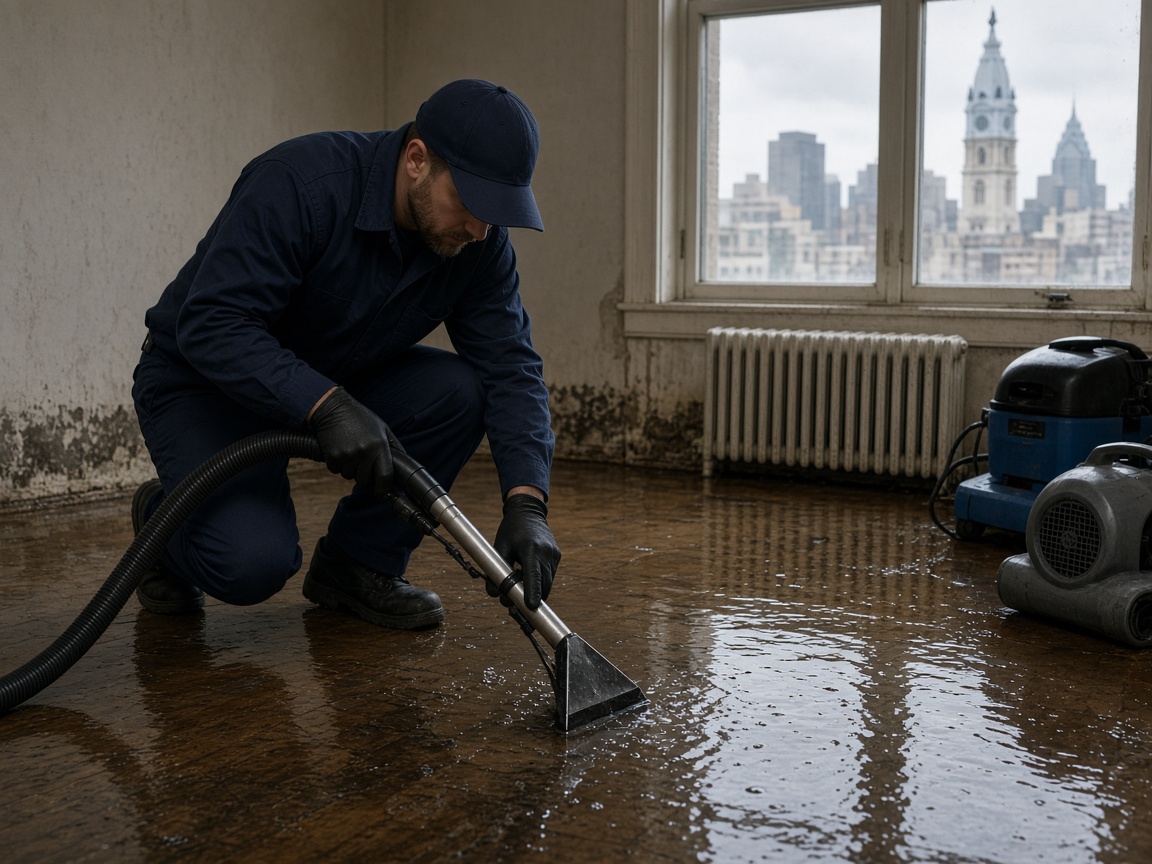
Philadelphia's older brick row homes in neighborhoods like Kensington, Northern Liberties, and West Philadelphia often have plaster walls and crawl spaces that trap moisture after a leak. Once winter temperatures drop, frozen supply lines in unheated basements or exterior walls expand and burst, sending water through multiple floors before anyone notices. Our crews arrive with moisture meters and infrared cameras to map hidden saturation in lath-and-plaster assemblies and under refinished hardwood without tearing up finished surfaces first.
Summer humidity in the humid subtropical climate keeps drywall and subfloors from drying on their own, especially in tight South Philadelphia blocks where airflow is limited. We stage commercial dehumidifiers and air movers sized for the square footage while containing the work zone to keep dust and spores from migrating into living areas. When sewage backups occur near older combined sewer lines in Manayunk or Roxborough, we treat the affected zones as Category 3 water and follow EPA guidelines for removal of porous materials that cannot be salvaged.
Jobs that cross property lines, such as water migrating from a neighbor's roof leak into a shared party wall in Germantown or Mount Airy, require coordination with adjacent owners and documentation for insurance. We document every step with photos and moisture logs so adjusters see the full scope without repeated site visits. After extraction we continue monitoring until readings return to normal for the building's age and construction type.
Technician insight
In Philadelphia the thing that catches most people out with 24/7 water damage restoration is how fast moisture travels through the plaster-and-lath walls of pre-war row homes; a small kitchen leak in Fishtown can saturate the party wall into the neighbor's unit before the homeowner even smells it, especially once cold winter air hits the brick exterior.
Frozen Supply Line in a Kensington Row Home
A second-floor supply line froze overnight in a 1920s Kensington row home, releasing water that ran down interior walls into the finished basement. We mapped saturation through three floors with moisture meters, extracted standing water, and ran drying equipment for five days while containing the work zone to protect the shared wall. Readings returned to normal and the homeowner avoided opening the plaster on the first floor.
24/7 Water Damage Restoration Services We Offer
✓Burst Pipe Water Extraction
Rapid removal of standing water from supply-line failures common in uninsulated Philadelphia row-home basements during cold snaps.
✓Sewage Backup Cleanup
Category 3 water removal and disinfection after combined-sewer overflows that affect lower levels in Fishtown, Kensington, and South Philadelphia.
✓Storm and Flood Drying
Structural drying after heavy rain events that overwhelm downspouts and enter through basement windows in low-lying blocks near the Schuylkill.
✓Appliance Leak Remediation
Cleanup and moisture mapping after washing-machine or water-heater failures that soak subfloors in multi-story homes in University City and Manayunk.
✓Crawl Space Water Removal
Pumping and drying of dirt-floor crawl spaces typical under older Philadelphia homes where moisture lingers and affects first-floor joists.
24/7 Water Damage Restoration Cost in Philadelphia, PA
| Service | Typical Range | What Affects It |
|---|---|---|
| Category 1 water extraction and drying | $800–$2,200 | Varies with square footage and number of days equipment must remain |
| Category 3 sewage cleanup | $1,800–$4,500 | Higher when porous materials must be removed and disposal fees apply |
| Crawl space drying | $650–$1,400 | Depends on access and whether vapor barrier replacement is needed |
| Emergency board-up or tarping | $350–$750 | Added when roof or window damage allows continued water entry |
Ranges are typical for Philadelphia, PA and confirmed with an exact written quote before any work starts.
How it works
- 1
Arrival And Containment
Technician reaches the property within the service window, sets up containment barriers, and stops the water source.
- 2
Extraction And Moisture Mapping
Standing water is removed with truck-mounted pumps; infrared and pin meters locate saturation in walls, floors, and ceilings.
- 3
Drying And Monitoring
Industrial air movers and dehumidifiers run until moisture readings match the building's normal baseline for Philadelphia construction.
- 4
Final Documentation
Photos, logs, and a written report are provided for insurance and homeowner records before equipment is removed.
Pricing
Upfront written quotes after inspection; final cost depends on affected square footage, water category, and drying duration.