2026-11-14 · Tony Moretti
Drying Out After Summer Thunderstorms Flood Your Basement
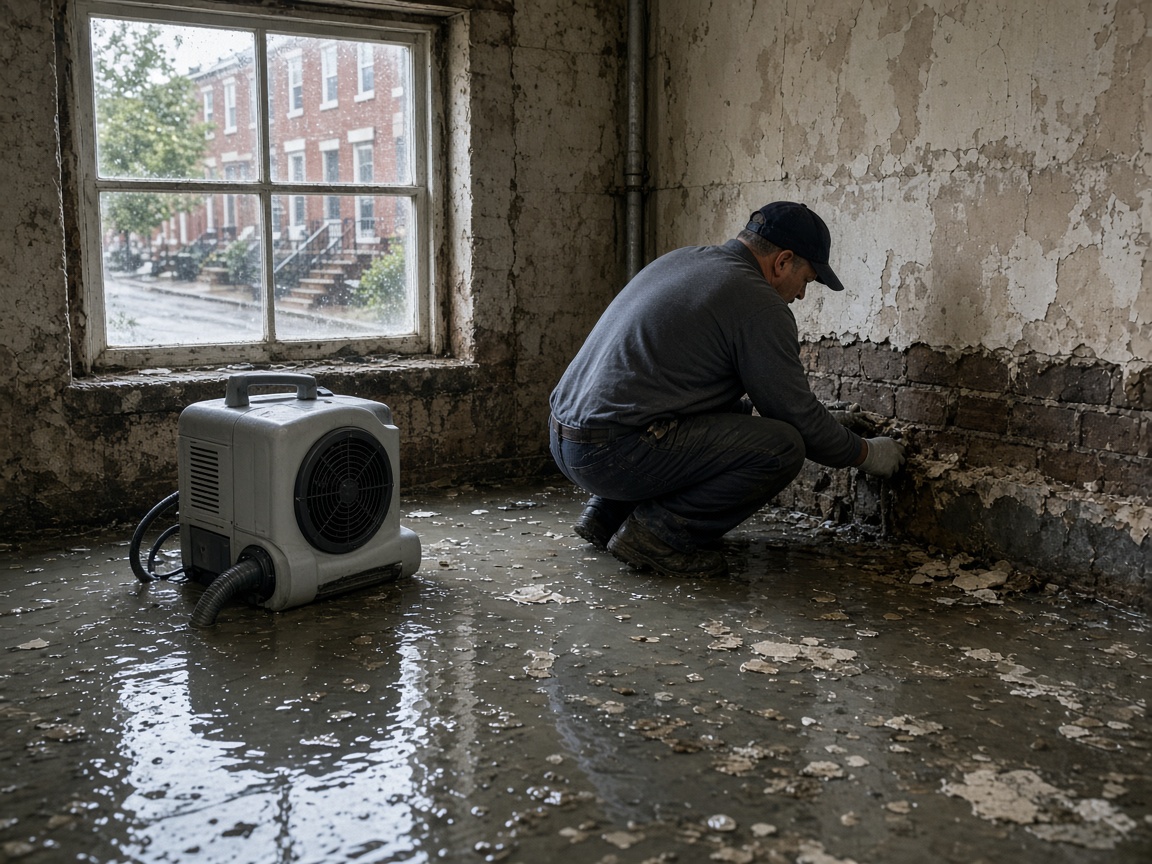
After summer thunderstorms flood a Philadelphia basement, full drying typically requires 5–10 days of continuous dehumidification and airflow once standing water is removed, depending on the volume and how quickly extraction begins.
Assessing Storm Damage in Row Homes
Philadelphia's humid subtropical climate fuels intense summer thunderstorms that drop several inches of rain in hours, pushing water into basements of pre-1940 row homes common in South Philadelphia, Kensington, and Fishtown. Stone or brick foundations in these neighborhoods often lack modern waterproofing, allowing seepage along mortar joints. Start by checking for water levels above 2 inches, which saturates subfloor insulation and joists. Note any sewage backup from combined storm and sanitary lines, especially in low-lying blocks near the Schuylkill. Document affected square footage and items before moving anything, since hidden moisture in lath-and-plaster walls can linger for weeks without detection.
Initial Extraction and Safety Steps
Remove standing water first with a wet vac or submersible pump rated for at least 1,000 gallons per hour to limit further absorption into concrete slabs. Shut off electricity to the basement at the panel if water reaches outlets, then ventilate by opening windows on dry days while running fans to exchange air. In University City and Manayunk homes built on slopes, check exterior grading around the foundation—settled soil often directs runoff straight toward basement windows. Wear rubber boots and gloves during cleanup to avoid contact with contaminants stirred up by heavy rain. Avoid using household fans alone, as they can spread spores without reducing moisture content below 60 percent relative humidity.
Targeted Drying for Local Conditions
Once bulk water is gone, deploy commercial air movers and dehumidifiers sized for the space—typically one 70-pint unit per 1,000 square feet in older Philadelphia row homes. Position equipment to create a vortex pattern that pulls moist air from corners where moisture pools behind appliances. In hot, humid summers, run dehumidifiers continuously and empty reservoirs twice daily, targeting indoor humidity under 50 percent. Homes in North Philadelphia and Roxborough with finished basements need infrared moisture meters to locate damp drywall behind paneling, since visual inspection misses trapped water. Monitor progress daily with a hygrometer; readings above 60 percent after four days signal the need for additional equipment or wall cavity drying.
Mold Risks and Long-Term Prevention
Philadelphia's warm, moist summers accelerate mold growth on saturated wood within 48 hours, especially in poorly ventilated basements of Germantown and Mount Airy row homes. Remove and discard porous materials like carpet padding or insulation that remain wet beyond 72 hours. Apply antimicrobial solutions only after surfaces are fully dry to avoid trapping moisture. Improve future resistance by extending downspouts 6–10 feet from the foundation and sealing visible cracks with hydraulic cement. For recurring issues tied to aging infrastructure, review the guide on Handling Water Damage From Aging Sewer Lines in South Philadelphia and consider Water Damage Restoration protocols that include thermal imaging.
Knowing When Professional Help Is Needed
If moisture persists after a week of drying or if the affected area exceeds 500 square feet, contact a local crew familiar with Philadelphia's housing stock. Technicians can use truck-mounted extraction and HEPA air scrubbers to reach hidden pockets in lath walls that DIY setups miss. Service is available at the address on Drumore Drive during posted hours, and crews also cover nearby cities such as Camden and Wilmington when storms track through the region. Pair this with the advice in Preventing Frozen Pipe Bursts in Philadelphia Row Homes to address year-round risks. Early professional intervention keeps secondary damage from affecting structural timbers in these century-old buildings.