2026-11-14 · Tony Moretti
Handling Water Damage From Aging Sewer Lines in South Philadelphia
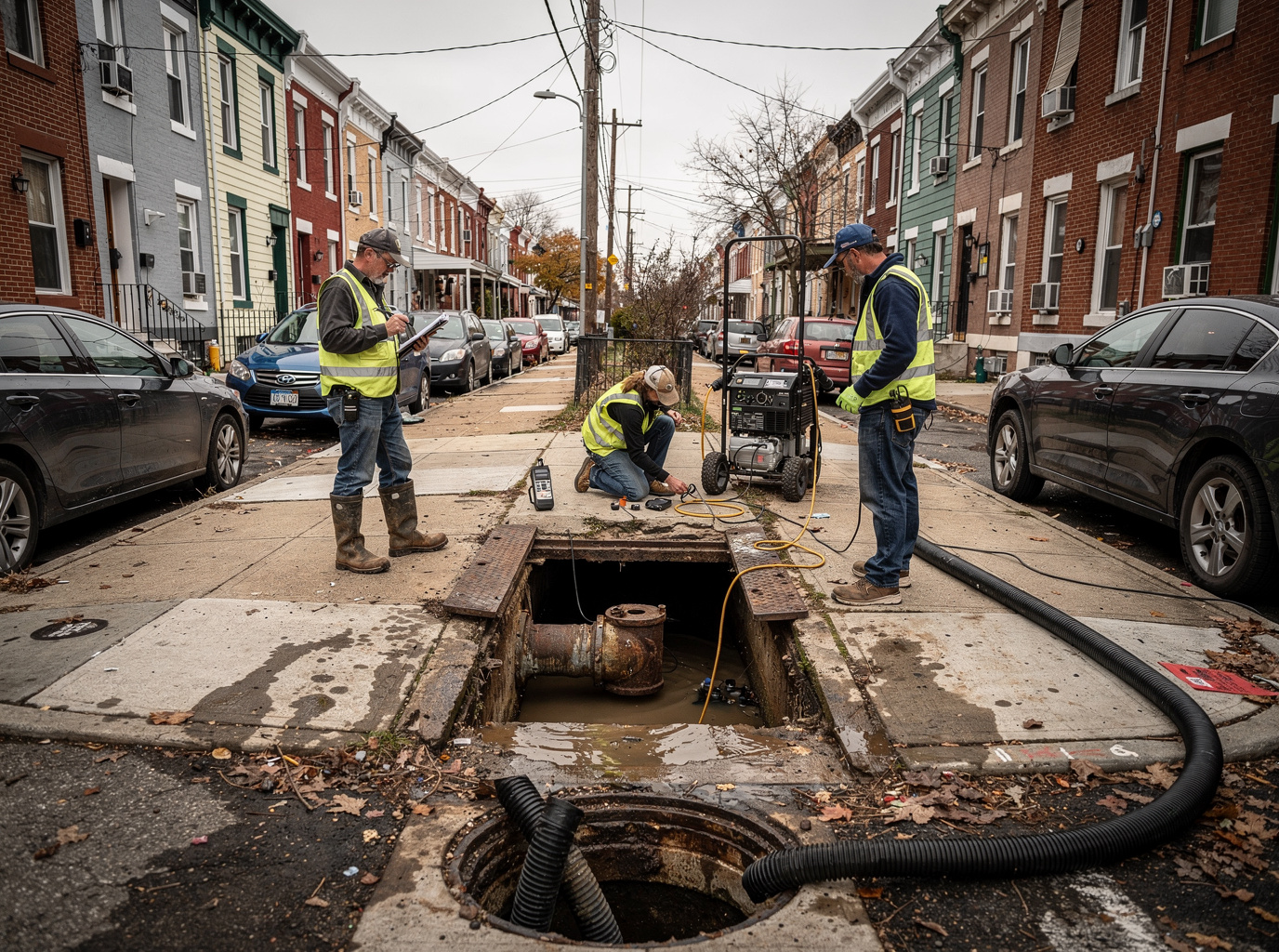
South Philadelphia row homes built before 1950 often see sewer backups from aging clay or cast-iron lines that have reached 60–80 years of service life. Addressing the resulting water damage within the first 24–48 hours limits mold growth and keeps repair costs between $1,200 and $4,500 depending on square footage affected.
Recognizing Sewer Backup Indicators in Row Homes
South Philadelphia's tight row-home basements sit close to the combined sewer system, so backups surface quickly after heavy rain or pipe collapse. Look for sewage odors near floor drains, water pooling around the cleanout, or dark stains on concrete slabs. In neighborhoods like Pennsport and Packer Park, older 4-inch laterals clog with grease and roots more often than newer PVC lines found in newer sections of the city. Homeowners also notice gurgling toilets or slow tubs on the first floor when the main line fails. These signs differ from roof leaks or appliance overflows because the water carries solid waste and requires specialized extraction equipment.
Immediate Containment Steps Before Professional Arrival
Turn off water at the main shutoff if pressure still flows, then avoid using any drains until the line is cleared. Place towels or plastic sheeting to keep contaminated water from migrating into finished areas or up stairwells common in South Philadelphia two-story homes. Open windows for ventilation but close interior doors to limit odor spread through the narrow hallways typical of these blocks. Do not attempt to plunge or snake the line yourself, as this can push sewage further into wall cavities or under finished floors. Document the water line with photos before any cleanup begins, noting the time and affected rooms.
Why Local Soil and Climate Worsen the Problem
Philadelphia's humid subtropical climate brings hot, humid summers that speed bacterial growth in standing sewage and cold winters that cause ground heave around brittle pipes. South Philadelphia's clay-heavy soils shift during freeze-thaw cycles, cracking already corroded sewer lines installed in the 1920s–1940s. Combined sewers overflow during intense summer thunderstorms, sending additional water back into basements near Broad Street and Oregon Avenue. These conditions turn a small crack into a full backup faster than in drier regions like parts of Wilmington or Trenton.
Professional water damage repair teams use moisture meters and thermal cameras to locate hidden saturation behind plaster walls without demolition. Extraction with truck-mounted units removes standing water in hours rather than days, then drying equipment runs for 3–5 days depending on humidity levels outside.
When to Schedule Follow-Up Restoration
Once the sewer line is repaired or replaced by a licensed plumber, focus shifts to drying and sanitizing. In South Philadelphia basements with limited airflow, commercial air movers and dehumidifiers prevent secondary mold on wooden joists. Homes near the Philadelphia Zoo or Citizens Bank Park often share party walls, so odor migration to neighbors becomes a concern if drying is incomplete. Replacement of porous materials like carpet pad or drywall below the flood line is usually required. For properties that also experience winter pipe issues, review preventing frozen pipe bursts in Philadelphia row homes for seasonal tips that complement sewer maintenance.
After the initial response, schedule a follow-up inspection 30 days later to confirm moisture levels have returned to normal. This step catches hidden pockets in the thick masonry foundations common on South Philadelphia streets.