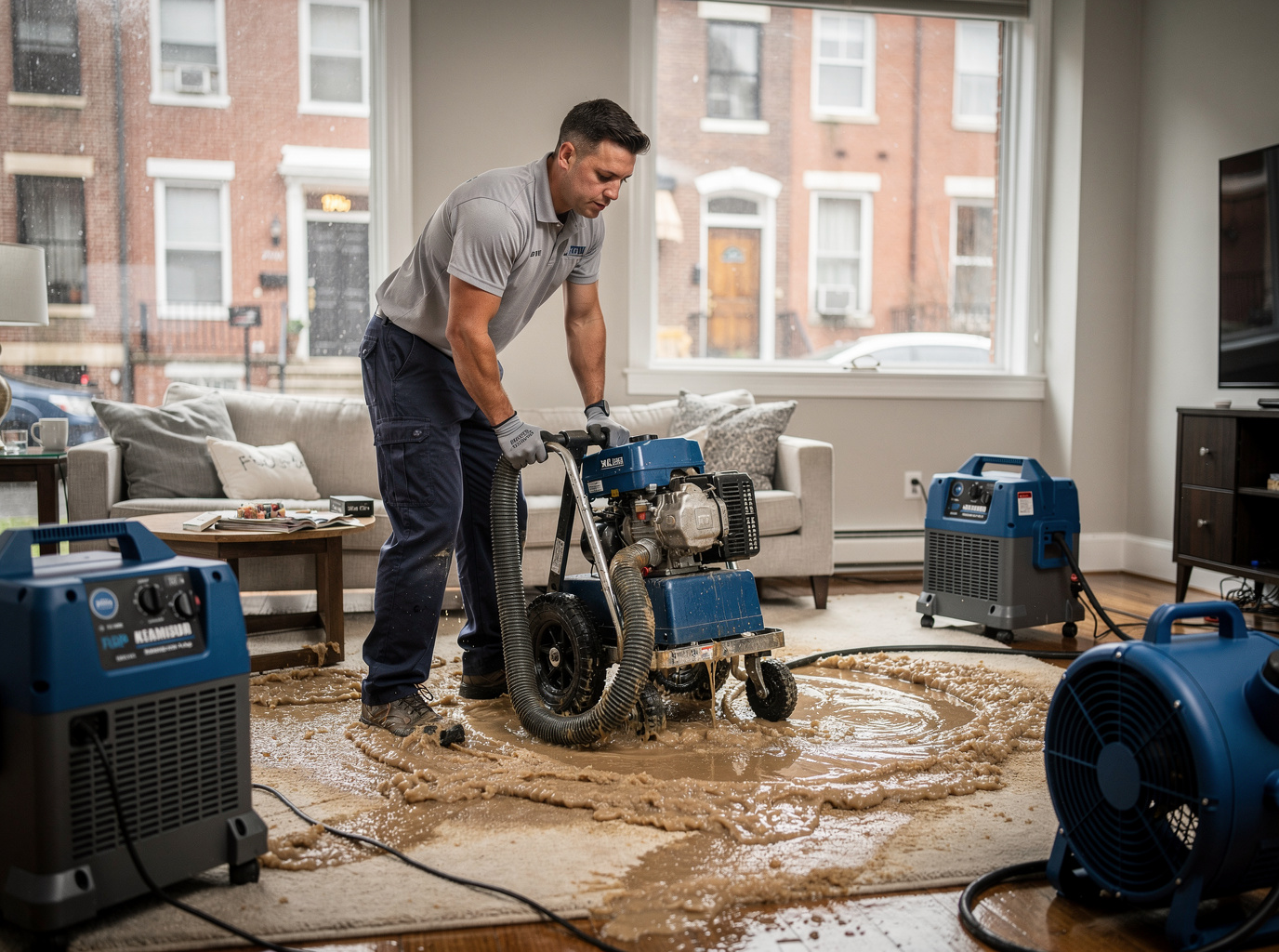
Philadelphia's older housing stock in neighborhoods like South Philadelphia, Fishtown, and Kensington often features plaster-and-lath walls and knob-and-tube wiring that trap moisture long after the initial leak. Winter freezes along the Delaware and Schuylkill rivers frequently burst pipes in unheated basements, while humid summers accelerate mold growth behind baseboards and under subfloors. Technicians must pull baseboards carefully to avoid damaging original trim and use moisture meters on multiple layers because surface readings alone miss hidden saturation in these structures.
In Center City and University City row homes, narrow access points and shared walls with neighboring properties require containment barriers that prevent cross-contamination during extraction. Clay-heavy soil in West Philadelphia and Germantown slows natural drainage, so exterior grading checks are routine on every job. Crews document conditions with photos before any demolition because insurance adjusters in Philadelphia expect detailed room-by-room notes showing pre-existing wear versus new damage.
Hot summers increase the risk of secondary mold on wet carpet padding and insulation within 48 hours, so drying plans include dehumidifiers sized for the tight floor plans common in Manayunk and Roxborough. Technicians also watch for hidden leaks at chimney bases and around skylights that are frequent in Mount Airy homes. All work follows local building codes for electrical safety when drying near older wiring.
Technician insight
In Philadelphia the thing that catches most people out with Residential Water Damage Restoration is how quickly moisture travels through plaster-and-lath walls in winter when pipes freeze. Older homes in South Philadelphia and Fishtown often have shared walls, so one leak can affect two properties if you do not contain it fast. I always check the electrical panel first because knob-and-tube wiring is still common and limits where we can safely place drying equipment.
Winter Pipe Burst in a Fishtown Row Home
A burst supply line on the second floor sent water down through plaster walls into the basement. We found saturated insulation behind the kitchen cabinets and standing water on the concrete slab. After extraction and three days of drying with equipment sized for the narrow layout, moisture readings returned to normal and the homeowner avoided full wall replacement.
Residential Water Damage Restoration Services We Offer
✓Basement Water Extraction
Removes standing water from Philadelphia row-home basements after pipe bursts or heavy rain, followed by targeted drying of concrete and masonry.
✓Attic Insulation Removal and Drying
Extracts wet insulation and dries roof decking in older Philadelphia homes where summer humidity and winter ice dams create hidden moisture pockets.
✓Plaster Wall Moisture Remediation
Locates and dries saturated plaster-and-lath walls common in South Philadelphia and Fishtown without unnecessary demolition of original finishes.
✓Sewage Backup Cleanup
Handles contaminated water from backups in older sewer lines that serve many North Philadelphia and Kensington properties.
✓Subfloor Drying and Repair
Pulls affected flooring and dries or replaces subfloors in homes where narrow joist spacing traps water after appliance or roof leaks.
Residential Water Damage Restoration Cost in Philadelphia, PA
| Service | Typical Range | What Affects It |
|---|---|---|
| Basement water extraction and drying | $800–$2,200 | Depends on depth of water and square footage |
| Attic drying after roof leak | $600–$1,400 | Varies with insulation type and access |
| Plaster wall drying and minor demo | $450–$1,100 | Higher in multi-story row homes |
| Sewage backup remediation | $1,200–$2,800 | Includes containment and disposal |
Ranges are typical for Philadelphia, PA and confirmed with an exact written quote before any work starts.
How it works
- 1
Initial Assessment
Technician arrives at the Philadelphia address, identifies water source, maps affected rooms, and checks for hidden moisture in walls and floors.
- 2
Water Removal
Extract standing water using pumps and vacuums suited to tight row-home access, then remove saturated materials that cannot be salvaged.
- 3
Drying And Monitoring
Place air movers and dehumidifiers, take daily moisture readings, and adjust equipment until drywall, subfloors, and insulation reach dry standards.
- 4
Final Documentation
Provide photos, moisture logs, and a written summary for insurance or homeowner records before any reconstruction begins.
Pricing
Pricing varies by water volume, number of affected rooms, and whether mold is present. Most residential jobs fall into common market ranges shown below.